How to Maintain a Defibrillator (AED Compliance Guide Australia)
25 March 2026
Best Defibrillator for Schools & Childcare Centres in Australia (2026 Guide)
26 March 2026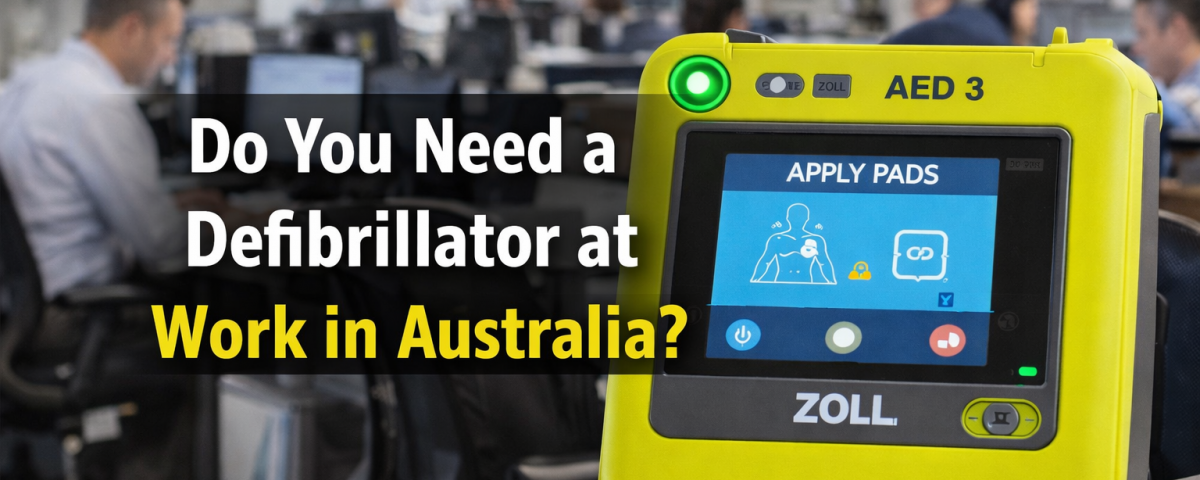
Quick Answer
A defibrillator (AED) is not legally required in all Australian workplaces. However, under Work Health and Safety (WHS) laws, employers must manage health risks — and in many workplaces, having an AED is considered best practice, especially where there is a higher risk of cardiac arrest or delayed emergency response.
Is a Defibrillator Mandatory in Australian Workplaces?
In most cases:
👉 No — AEDs are not strictly mandatory by law
However:
👉 You are legally required to manage risks to health and safety
This is where AEDs come in.
Under WHS legislation, businesses must:
- Identify potential risks
- Implement reasonable controls
- Ensure emergency preparedness
👉 In many workplaces, an AED is considered a reasonable and expected control measure.
When Is an AED Strongly Recommended?
You should strongly consider a defibrillator if your workplace has:
🏭 High-Risk Environments
- Construction sites
- Warehouses
- Manufacturing facilities
- Mining and remote work
👥 Large or Public-Facing Workplaces
- Offices with large staff numbers
- Shopping centres
- Gyms and fitness facilities
- Sports clubs
⏱ Delayed Emergency Response
- Remote locations
- Areas with long ambulance response times
👶 Presence of Children or Vulnerable People
- Schools
- Childcare centres
- Medical clinics
👉 In these environments, having an AED is often considered essential. Learn more about Using Defibrillators on a Child
Why Defibrillators Are Important in the Workplace
- Sudden cardiac arrest can happen anywhere, at any time
- Survival decreases by ~10% for every minute without defibrillation
- AEDs allow immediate treatment before emergency services arrive
👉 Having an AED on-site can significantly improve survival outcomes.
Workplace Responsibilities (WHS Expectations)
If you choose to install an AED:
👉 You are responsible for ensuring it is:
- Accessible
- Clearly visible
- Maintained and functional
- Known to staff (location awareness)
You should also:
- Include AEDs in emergency response plans
- Assign responsibility for maintenance
- Conduct periodic checks
Do Staff Need Training to Use an AED?
No — AEDs are designed for use by untrained people.
They:
- Provide voice instructions
- Guide the user step-by-step
- Only deliver a shock if required
👉 That said, many workplaces still provide basic first aid or CPR training.
Choosing the Right AED for Your Workplace
1. Ease of Use
- Clear voice prompts
- Simple operation
2. Child Compatibility
- Visitors
- Families
- Public access
👉 Choose an AED that:
- Supports children
- Minimises steps (e.g. universal pads)
3. Visibility & Storage
- Install in a central, visible location
- Use signage
- Consider alarmed cabinets
4. Maintenance Requirements
- Regular checks required
- Pads and batteries must be in date
- Choose models with low maintenance where possible
Best AED Types for Workplaces
🟢 General Offices & Workplaces
- Simple, affordable AEDs
- Low maintenance
- Suitable for untrained users
🟡 Public Access Environments
- Highly visible
- Easy-to-use
- Child-compatible
🔵 Industrial & High-Risk Workplaces
- Durable
- Advanced features (CPR feedback)
- Longer-life components
Cost vs Risk: Is It Worth It?
AED cost:
- ~$1,400 to $3,000+
Compare that to:
- Risk to employees
- Legal exposure
- Reputational impact
👉 For most businesses, the cost is relatively low compared to the potential benefit.
FAQs
Is a defibrillator required by law in Australia?
No, but businesses must manage health and safety risks, and AEDs are often considered best practice.
Can anyone use a defibrillator at work?
Yes. AEDs are designed for use by untrained people.
Where should a workplace AED be located?
In a visible, central location with clear signage.
How many AEDs does a workplace need?
Depends on size, layout, and risk — larger sites may require multiple units.
Final Recommendation
If you’re assessing whether your workplace needs a defibrillator:
👉 Consider your risk level
👉 Consider response times
👉 Consider who is on-site
In many cases:
👉 Installing an AED is a simple, cost-effective way to improve workplace safety.
Explore Workplace Defibrillators
Looking for the right AED for your workplace?
👉 Shop Defibrillators at First Aid Kits Australia
👉 Compare Models for Workplace Use
👉 Best Defibrillators in Australia (2026 Guide)