Do You Need a Defibrillator at Work in Australia?
25 March 2026
Best AED for Sports Clubs & Gyms in Australia (2026 Guide)
26 March 2026Best Defibrillator for Schools & Childcare Centres in Australia (2026 Guide)
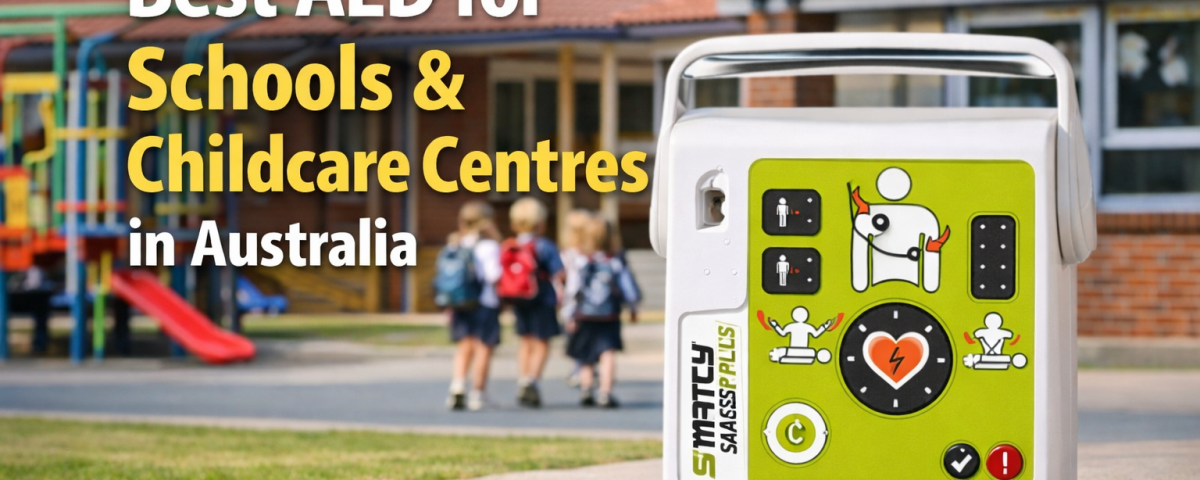
Defibrillators for Schools and Childcare
Quick Answer
The best defibrillator (AED) for schools and childcare centres in Australia is one that is simple to use, highly visible, and suitable for both adults and children. AEDs with universal pads (no need to switch for child use) are generally the safest and most practical option in an emergency.
Do Schools & Childcare Centres Need a Defibrillator?
AEDs are not mandatory in all schools or childcare settings in Australia, but:
👉 They are strongly recommended as part of best practice safety planning.
Children, staff, parents, and visitors are all present on-site — and sudden cardiac arrest can occur without warning.
👉 Many organisations now treat AEDs as a standard safety requirement, similar to first aid kits.
Why Child Compatibility Is Critical
This is the single most important factor for schools and childcare.
There are three types of AEDs:
1. AEDs Requiring Separate Child Pads
- Child pads must be purchased separately
- Must be swapped during an emergency
👉 Risk: Pads may not be available or easily found
2. AEDs With Child Mode (Key or Button)
- Requires switching to child mode
- Same pads used
👉 Risk: User may forget to activate the mode
3. AEDs With Universal Pads (Recommended)
- Same pads used for adults and children
- No switching required
👉 Best option for schools:
Reduces complexity, saves time, and avoids mistakes in high-stress situations.
Real-World Scenario (Why This Matters)
Imagine:
- A child collapses during sport or class
- Staff retrieve the AED
- Child pads are missing or expired
👉 Even a short delay can have serious consequences
This is why many schools now prioritise AEDs with universal pads.
Key Features to Look for in a School AED
✅ 1. Simple, Clear Instructions
- Voice prompts
- Visual guidance
- Suitable for untrained users
✅ 2. Child Compatibility
- Universal pads preferred
- No need for additional accessories
✅ 3. Visibility & Accessibility
- Located in a central, visible area
- Clear signage
- Accessible during all operating hours
✅ 4. Low Maintenance Requirements
- Long-life pads and batteries
- Self-checking systems
- Minimal ongoing admin
✅ 5. Durability
- Able to handle frequent use or movement
- Suitable for indoor/outdoor environments if needed
Best AED for Schools & Childcare
🟢 Smarty Saver SM2 / SM4 AED Range
One of the most practical and cost-effective options for schools and childcare centres.
Why it’s ideal:
- Same pads for adults and children
- No switching required
- Simple voice instructions
- Low ongoing cost
- Strong value for budget-conscious organisations
👉 Best for:
Primary schools, childcare centres, sports-focused schools, general use environments
🔵 Alternative Option: Premium AEDs (e.g. Zoll AED 3)
Better suited for:
- Large campuses
- Schools with medical staff
- Higher-risk environments
Advantages:
- CPR feedback
- Advanced features
- Higher durability
AED Comparison for Schools
- Located in a central, visible area
- Clear signage
- Accessible during all operating hours
✅ 4. Low Maintenance Requirements
- Long-life pads and batteries
- Self-checking systems
- Minimal ongoing admin
✅ 5. Durability
- Able to handle frequent use or movement
- Suitable for indoor/outdoor environments if needed
Best AED for Schools & Childcare
🟢 Smarty Saver SM2 / SM4 AED Range
One of the most practical and cost-effective options for schools and childcare centres.
Why it’s ideal:
- Same pads for adults and children
- No switching required
- Simple voice instructions
- Low ongoing cost
- Strong value for budget-conscious organisations
👉 Best for:
Primary schools, childcare centres, sports-focused schools, general use environments
🔵 Alternative Option: Premium AEDs (e.g. Zoll AED 3)
Better suited for:
- Large campuses
- Schools with medical staff
- Higher-risk environments
Advantages:
- CPR feedback
- Advanced features
- Higher durability
AED Comparison for Schools
| Feature | Smarty Saver SM2 | Premium AED (e.g. Zoll AED 3) |
|---|---|---|
| Ease of Use | Very simple | Advanced |
| Child Compatibility | Universal pads | Universal pads |
| Price | Lower | Higher |
| Maintenance | Low | Moderate |
| Best For | Most schools | Large/complex environments |
Where Should an AED Be Located in a School?
Best locations include:
- Administration office
- Gymnasium or sports area
- Main reception
- Staff room
👉 Larger schools may require multiple AEDs.
Maintenance & Responsibility
Schools should:
- Assign responsibility to staff
- Perform regular checks
- Track pad and battery expiry
- Include AEDs in emergency plans
👉 Simple systems prevent failure when it matters most.
Cost Considerations for Schools
Typical AED cost:
- $1,400 to $3,000+
Additional considerations:
- Pads and battery replacement
- Cabinet (optional but recommended)
👉 Many schools prioritise value + simplicity over advanced features
FAQs
Can a defibrillator be used on a child?
Yes — AEDs are safe for children when used with appropriate pads or settings.
Do schools need staff training to use an AED?
No, but training is recommended for confidence and preparedness.
How many AEDs should a school have?
Depends on size and layout — larger campuses may require multiple units.
Are AEDs required in Australian schools?
Not always mandatory, but widely recommended as best practice.
Final Recommendation
If you are choosing an AED for a school or childcare centre:
👉 Prioritise simplicity
👉 Ensure child compatibility
👉 Choose a reliable, low-maintenance model
For most schools:
👉 AEDs with universal pads provide the best combination of safety, simplicity, and value.
Explore AEDs for Schools & Childcare
Looking for the right defibrillator for your school?
👉 Shop Defibrillators at First Aid Kits Australia
👉 Compare Models for Schools & Childcare
👉 Learn Best Defibrillators in Australia (2026 Guide)
👉 Learn Can a Defibrillator Be Used on a Child?


 by
by