Best Defibrillator for Schools & Childcare Centres in Australia (2026 Guide)
26 March 2026
Best AED for Remote Areas & Farms in Australia (2026 Guide)
26 March 2026Best AED for Sports Clubs & Gyms in Australia (2026 Guide)
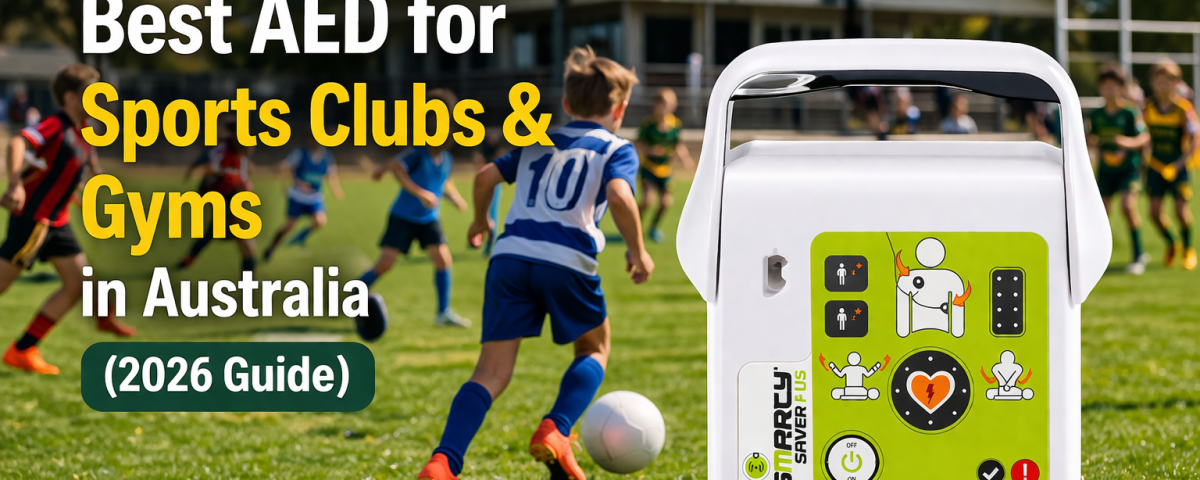
Defibrillator (AED) for Sports Club & Gym
Quick Answer
The best AED for sports clubs and gyms is one that is highly visible, easy to use, and suitable for both adults and children. AEDs with universal pads are ideal, as they eliminate the need to switch settings or pads during an emergency.
Do Sports Clubs & Gyms Need a Defibrillator?
AEDs are not mandatory in all sports clubs and gyms in Australia, but:
👉 They are strongly recommended — and increasingly expected
Why:
- Physical activity increases cardiac risk
- Large groups of people are present
- Events and competitions increase exposure
👉 Many facilities now treat AEDs as essential safety equipment
Why AEDs Are Critical in Sports Environments
- Sudden cardiac arrest can occur during exercise
- Immediate defibrillation is critical
- Ambulance response times may not be fast enough
👉 Survival decreases by ~10% for every minute without defibrillation
Real-World Scenario
Imagine:
- A player collapses during a game or training
- Someone runs to retrieve the AED
👉 If the AED is:
- Hard to find
- Complicated to use
- Missing child pads
Even small delays can have serious consequences.
Key Features to Look for in a Sports AED
✅ 1. Visibility & Accessibility
- Clearly visible location
- Near high-traffic areas
- Easy to access within minutes
✅ 2. Ease of Use
- Clear voice prompts
- Step-by-step instructions
- Suitable for untrained users
✅ 3. Child Compatibility (Critical for Clubs)
Many clubs include:
- Junior teams
- Youth competitions
👉 Choose an AED with:
- Child capability
- Minimal steps (ideally universal pads)
✅ 4. Durability
- Suitable for movement and transport
- Resistant to dust and outdoor conditions
✅ 5. Low Maintenance
- Long-life pads and batteries
- Self-check systems
- Minimal admin required
AED Considerations by Sport Type
While requirements vary slightly between sports, the key factors remain the same: visibility, ease of use, and child compatibility.
⚽ Football & Soccer Clubs
- Large player numbers
- Multiple fields or training areas
👉 Consider:
- Multiple AED locations
- Placement near sidelines or clubrooms
🏉 Rugby & Contact Sports
- High physical impact
- Increased risk of sudden cardiac events
👉 Consider:
- Fast access from field
- Simple, rugged AEDs
🏏 Cricket Clubs
- Large playing areas
- Players spread out across the field
👉 Consider:
- Central AED placement
- Portable units for match days
🏐 Netball & Indoor Sports
- Indoor courts
- High spectator presence
👉 Consider:
- Wall-mounted AED
- Clear signage
🏋️ Gyms & Fitness Centres
- Continuous high-intensity activity
- Mixed age groups
👉 Consider:
- Highly visible AED location
- Easy access from main workout area
Best AED for Sports Clubs & Gyms
🟢 Best All-Round Option
Smarty Saver SM2 / SM4 AED Range
Ideal for most sports clubs and gyms.
Why it stands out:
- Same pads for adults and children
- No switching required
- Simple voice prompts
- Low ongoing cost
- Portable and easy to use
👉 Best for:
Community clubs, gyms, schools, multi-use facilities
🔵 Premium Option
Best suited for:
- Large facilities
- High-performance environments
- Professional or high-risk settings
Key advantages:
- Real-time CPR feedback
- Advanced features
- High durability
AED Comparison for Sports Use
| Feature | Smarty Saver SM2/SM4 | Zoll AED 3 |
|---|---|---|
| Ease of Use | Very simple | Advanced |
| Child Compatibility | Universal pads | Universal pads |
| Portability | High | Moderate |
| Price | Lower | Higher |
| Best For | Most clubs/gyms | High-performance environments |
Where Should an AED Be Located?
Best locations include:
- Gym floor
- Clubhouse or reception
- Near sports fields
- First aid room
👉 Larger facilities may require multiple AEDs
Indoor vs Outdoor Considerations
- Indoor: wall-mounted cabinet
- Outdoor: weatherproof cabinet recommended
👉 The AED must be accessible within minutes
Cost Considerations
Typical AED cost:
- $1,400 to $3,000+
Additional:
- Pads and batteries
- Cabinet (optional)
👉 Most clubs prioritise:
- Reliability
- Simplicity
- Low ongoing cost
FAQs
Do sports clubs need a defibrillator in Australia?
Not always mandatory, but strongly recommended.
Can an AED be used during sport?
Yes — AEDs are designed for emergency use during physical activity.
Should sports clubs have child-compatible AEDs?
Yes — especially where junior players are involved.
How many AEDs does a facility need?
Depends on size, layout, and access times.
Final Recommendation
If you’re choosing an AED for a sports club or gym:
👉 Prioritise visibility
👉 Choose a simple, reliable device
👉 Ensure child compatibility
👉 Minimise complexity in emergencies
For most facilities:
👉 AEDs with universal pads provide the best balance of safety, simplicity, and value.
Explore AEDs for Sports Clubs & Gyms
Looking for the right AED?
👉 Shop Defibrillators at First Aid Kits Australia
👉 Learn Best Defibrillators in Australia
👉 Learn Can a Defibrillator Be Used on a Child?
👉 Learn Defibrillator Cost in Australia (2026 Full Breakdown)


 by
by